The Best Fluffy Pancakes recipe you will fall in love with. Full of tips and tricks to help you make the best pancakes.
Short Horror Games: The Ultimate Guide to Quick Scares and Bite-Sized Terror in 2026
There’s something uniquely terrifying about a horror game that doesn’t overstay its welcome. While sprawling 40-hour survival horror epics have their place, the bite-sized terror of a 1-3 hour experience can deliver concentrated dread that lingers long after the credits roll. Short horror games have exploded in popularity over the past few years, offering streamers endless content, casual players manageable scares, and hardcore horror fans experimental experiences that push boundaries without demanding weekend-long commitments.
The beauty of short horror lies in its precision. Developers can’t rely on resource management loops or padding, every asset, every sound cue, every jump scare needs to earn its place. Whether you’re looking to knock out a complete horror experience during a lunch break or want to sample multiple terrifying worlds in a single evening, short horror games deliver fear without the fat. This guide breaks down what makes them work, where to find the best ones across every platform, and how to maximize the terror when you hit play.
Key Takeaways
- Short horror games deliver concentrated dread in 1-3 hour experiences, making them perfect for modern gamers with limited time who want meaningful scares without lengthy commitments.
- The best short horror games focus on precision design with strong openings, focused mechanics, and atmospheric elements rather than padding, allowing every asset and sound cue to earn its place in the narrative.
- Short horror games thrive across multiple platforms including PC (Steam, itch.io), consoles (PlayStation, Xbox, Nintendo Switch), and mobile, with free options on itch.io offering experimental experiences and premium titles ranging from $5-15 delivering polished, replayable content.
- Optimizing your environment with proper lighting, quality headphones, and minimal distractions significantly enhances horror immersion, while first playthroughs solo and subsequent group sessions provide different but equally valuable experiences.
- Emerging technologies like AI-assisted procedural generation, photogrammetry, and VR are pushing short horror games into new frontiers, with VR proving particularly effective for 45-90 minute experiences due to the platform’s natural intensity limitations.
- The accessibility of development tools and supportive platforms means short horror’s golden age is just beginning, proving that effective scares don’t require 40-hour campaigns—just focused execution and your complete attention for 90 minutes.
Why Short Horror Games Are Perfect for Modern Gamers
The Appeal of Bite-Sized Terror
Short horror games respect your time in ways that traditional AAA horror titles often can’t. A 90-minute horror experience can be completed in one sitting, preserving the tension and atmosphere that gets diluted when you’re forced to save-and-quit halfway through a creepy asylum or haunted house. The pacing stays tight because developers know they can’t lose your attention, there’s no room for filler fetch quests or backtracking padding.
Streaming culture has amplified this appeal massively. Content creators can deliver a complete narrative arc with payoff in a single stream session, and viewers actually stick around for the whole experience. Games like Iron Lung and The Mortuary Assistant became viral sensations partly because their 2-3 hour runtimes made them perfect for YouTube videos and Twitch streams. You get the full emotional journey, setup, escalation, climax, and resolution, without needing a multi-part series.
For players with packed schedules, short horror games eliminate the guilt of an unfinished backlog. You can knock out three different horror experiences in the time it would take to reach the midpoint of a Resident Evil game. Each one offers a distinct flavor of fear: maybe a PS1-style haunted VHS tape aesthetic, then a photorealistic ghost story, then a Lovecraftian text adventure. Variety keeps the genre fresh.
Time Investment vs. Scare Factor
Here’s the thing about sustained fear: it’s exhausting. Horror games that stretch beyond 10-15 hours often hit diminishing returns where players become desensitized to the scares or start exploiting game systems to feel safer. Short horror games sidestep this entirely by maintaining relentless pressure. You never get comfortable enough to stop being afraid.
The time investment also lowers the barrier to entry for horror-curious players. Someone who’s intimidated by the thought of committing to Amnesia: The Dark Descent might be willing to try a 45-minute game like Fears to Fathom or Summer of ’58. If they hate it, they’ve only lost less time than a movie. If they love it, they’ve discovered a new genre without a massive commitment.
From a design perspective, shorter experiences let developers focus resources on crafting killer setpieces rather than spreading assets thin across sprawling environments. Every hallway can be meticulously designed, every sound effect precisely placed. There’s no padding required to justify a $60 price tag, which means indie creators can experiment with unconventional mechanics, disturbing themes, or narrative risks that wouldn’t fly in a major studio production.
What Defines a Short Horror Game?
Playtime Parameters and Genre Boundaries
Most players and developers agree that “short” horror games clock in under 5 hours for a first playthrough. The sweet spot tends to be 1-3 hours, long enough for meaningful narrative development but compact enough to maintain atmosphere without repetition. Games under 30 minutes usually fall into the “micro-horror” or “horror vignette” category, while anything pushing 5-8 hours starts entering standard indie horror territory.
Platform matters here. A 20-minute mobile horror game feels complete on a phone, but the same runtime on PC might feel like a proof-of-concept demo. Console players typically expect slightly meatier experiences even in the “short” category, which is why many successful console shorts aim for the 2-4 hour range. Steam’s ecosystem, particularly the flood of content on itch.io, has normalized ultra-short experiences in the 15-60 minute range.
Genre boundaries blur in interesting ways at shorter runtimes. A traditional survival horror game needs time to establish resource scarcity and teach players crafting systems. Short horror games often lean into adjacent genres: walking simulators with horror atmospheres (Layers of Fear segments), narrative adventures with branching fear (Until Dawn structure compressed), or pure atmospheric exploration (P.T. spiritual successors). Some games like Iron Lung prove you can build genuine dread from a single claustrophobic mechanic sustained for 90 minutes.
Key Elements That Make Short Horror Games Effective
Strong openings are non-negotiable. You’ve got maybe 5-10 minutes to hook players before they bounce, which means short horror games typically drop you into unsettling situations immediately. No lengthy tutorials, no slow-burn world-building, you wake up in the wrong place, something’s clearly off, and the rules are simple enough to intuit through context.
Focused mechanics separate memorable short horror from forgettable experiments. The best entries pick one or two core systems and execute them flawlessly. Iron Lung gives you a submarine, limited vision, and coordinates to photograph. The Closing Shift simulates coffee shop cleanup with a stalker outside. Games that try to cram inventory management, combat, puzzles, and stealth into 90 minutes usually end up feeling like incomplete versions of longer games.
Atmosphere carries more weight than jump scares in effective short horror. While a well-timed scare absolutely has its place, developers working with limited runtime rely heavily on audio design, environmental storytelling, and player psychology. The horror game community on PC has championed indie titles that build dread through soundscapes and visual design rather than scripted monster closets.
Replayability mechanics can extend value without inflating base runtime. Multiple endings, branching paths, randomized elements, or unlockable modes give players reasons to revisit without forcing everyone through a padded 6-hour campaign. The Mortuary Assistant nails this with procedurally selected demons and multiple ending conditions that encourage 3-4 playthroughs of its 2-hour core loop.
The Best Short Horror Games You Can Play Right Now
Modern Masterpieces (2024-2026)
Iron Lung (2022, but still dominating 2024-2026 discussions) remains the gold standard for minimalist horror done right. Developer David Szymanski built an entire game around piloting a rust-bucket submarine through a blood ocean on an alien moon, navigating by coordinates and grainy photographs. The 90-minute runtime never wastes a second. It’s available on PC and consoles for around $6, a steal for the existential dread it delivers.
The Closing Shift and The Convenience Store (2023-2024) from Chilla’s Art prove the studio continues to dominate the ultra-realistic Japanese horror space. Both games simulate mundane jobs, closing a café, working a convenience store night shift, that gradually reveal sinister undertones. They run 1-2 hours each and nail the uncanny valley between ordinary life and creeping terror. PC and console versions available.
My Friendly Neighborhood (2023) subverts expectations by mixing Sesame Street aesthetics with survival horror mechanics in a 3-4 hour campaign. It’s the longer end of “short” but justifies every minute with tight combat, clever puppet enemy designs, and genuine laughs alongside scares. The tone walks a tightrope that shouldn’t work but absolutely does. Available on PC, PS5, Xbox Series X
|
S, and PS4/Xbox One.
Maple County (2025) emerged as one of the surprise hits in the analog horror space, translating the VHS aesthetic into playable form. The 2-hour runtime spans multiple episodes that feel like lost footage from a cursed public access channel. PC-exclusive currently, though console ports are rumored for late 2026.
Timeless Classics Worth Revisiting
P.T. (2014) technically no longer exists in downloadable form, but its influence echoes through every short horror game released since. The 20-minute looping hallway became the blueprint for environmental storytelling and psychological horror in confined spaces. If you somehow still have it on a PS4, it’s worth experiencing.
Spooky’s Jump Scare Mansion (2014, with HD Renovation in 2017) delivers 2-3 hours of escalating horror disguised as a cutesy mansion exploration. The first 100 rooms lull you into false security before the game reveals its true nature. It’s aged remarkably well and frequently goes on sale for under $5 on Steam, with console versions available.
Anatomy (2016) by Kitty Horrorshow remains one of the most unsettling house exploration games ever made. The 30-45 minute runtime builds to a conclusion that lingers psychologically for days. It’s PC-only on itch.io, and the $3 asking price is basically free for what it delivers.
Layers of Fear (2016, with 2023 remake) walks the line between short-ish and standard length at 4-6 hours, but individual chapter segments work perfectly as standalone horror experiences. The painter’s mansion constantly reconfigures itself around you, creating disorientation that never gets old. Available across all platforms.
Hidden Gems and Indie Standouts
Discover indie horror titles featured in extensive gaming coverage that mainstream audiences often overlook. Games like The Tartarus Key (2023) blend escape room puzzles with occult horror in a tight 3-4 hour package. It’s available on PC and Switch, with clever puzzle design that respects your intelligence.
September 1999 (2023) captures the specific dread of late-90s found footage aesthetics in about 20 minutes. You’re watching a VHS recording of a children’s TV show that goes wrong in deeply unsettling ways. It’s free on itch.io and has spawned numerous imitators that haven’t quite captured the same lightning.
The Mortuary Assistant (2022) gives you 2-3 hours to embalm bodies while identifying and exorcising demons that might be possessing you, the corpses, or both. The randomized elements and multiple endings make it worth replaying. Available on PC, PS5, Xbox Series X
|
S, and last-gen consoles.
Lost in Vivo (2018) flies under many radars but delivers claustrophobic sewer horror across 2-3 hours with PS1-era graphics that enhance rather than detract from the experience. PC-exclusive, frequently praised by horror game deep-cut enthusiasts.
Summer of ’58 (2021) from Emika Games offers photorealistic environments and a 45-minute narrative about a couple’s remote getaway gone wrong. The environmental detail is absurd for a solo developer project. PC-only currently, available on Steam.
Platform-Specific Recommendations for Short Horror Experiences
PC Gaming: Steam, Itch.io, and Beyond
PC remains the undisputed king of short horror. Steam hosts hundreds of 1-3 hour experiences ranging from $3 indie projects to $15 premium titles. The platform’s recommendation algorithm has gotten surprisingly good at surfacing hidden horror gems based on playtime and tag preferences. Filter by “Horror,” “Short,” and “Singleplayer” to find curated lists.
Itch.io deserves special attention as the epicenter of experimental and free horror. Developers use it as a testing ground for weird ideas that wouldn’t survive Steam’s marketplace. Searching “horror” with a max price of $5 returns hundreds of playable experiences, many under 30 minutes. Quality varies wildly, but the barrier to entry is low enough that you can afford to gamble on strange premises.
Standout PC exclusives (as of March 2026):
- Fears to Fathom series (episodes 1-5 now available, 1-2 hours each)
- September 1999 (free, 20 minutes)
- Chasing Static (2-3 hours, £7.99)
- No Players Online (30 minutes, free)
- The Survey (45 minutes, $1.99)
Epic Games Store occasionally gives away short horror titles, though their horror catalog is smaller. GOG hosts DRM-free versions of many indie horror classics. Game Pass PC rotates in 2-4 hour horror experiences quarterly, currently includes The Mortuary Assistant and Scorn (though Scorn pushes 6-7 hours).
Console Options: PlayStation, Xbox, and Nintendo Switch
PlayStation’s horror catalog skews toward 3-5 hour experiences rather than ultra-short games. MADiSON (4-6 hours) represents the upper limit of what still qualifies as “short-ish.” Visage (5-8 hours) crosses into standard indie horror length. For truly short experiences, look at The Mortuary Assistant, My Friendly Neighborhood, and Resident Evil Village’s Mercenaries mode if you’re counting arcade-style horror.
Xbox Game Pass is the secret weapon for console horror fans. The service rotates 10-15 horror titles at any given time, including several in the 2-4 hour range. March 2026’s lineup includes Signalis (5-7 hours but tightly paced), Vampire Survivors (arcade horror, infinite replayability), and Amnesia: The Bunker (3-5 hours). Game Pass effectively makes short horror free if you’re already subscribed.
Nintendo Switch hosts a surprising number of indie horror ports, though performance can be inconsistent. Little Nightmares I & II (3-4 hours each) run well in portable mode and deliver concentrated creepy platforming. Detention (3 hours) and Devotion (2-3 hours) from Red Candle Games bring Taiwanese horror to Nintendo’s platform. Layers of Fear and The Town of Light round out solid 3-5 hour options.
Console-specific challenges: Digital storefronts don’t always filter by playtime effectively. You’ll need to check HowLongToBeat.com or community discussions to verify actual runtime before purchasing.
Mobile Horror Games for Quick Scares on the Go
Mobile horror has evolved beyond cheap jump-scare apps into legitimate short-form experiences. Eyes: The Horror Game remains a solid 15-30 minute repeatable scare on iOS and Android. Fran Bow (4-6 hours across episodes) and Sally Face (similar length) technically exceed “short” parameters but deliver chapter-based horror perfect for commute sessions.
The Past Within (2022) from Rusty Lake offers a unique 2-player co-op horror puzzle experience at 1-2 hours. One player needs the mobile version, one needs PC, it’s designed for voice chat coordination and works brilliantly for couples or friends.
Dead by Daylight Mobile translates the asymmetric horror multiplayer into quick 10-15 minute matches. It’s not story-driven horror, but it delivers adrenaline spikes in mobile-friendly chunks. Free-to-play with the usual gacha economics.
Granny and its sequels offer simple escape-room horror in 5-10 minute attempts. The execution is rough, but the core loop of stealth and resource gathering works for casual horror fans. Free with ads.
Mobile’s biggest advantage is accessibility, you can knock out a complete horror experience during a lunch break or commute. The biggest drawback is control schemes that rarely match the precision of gamepad or mouse-and-keyboard input, particularly for games requiring quick reactions.
Free vs. Paid Short Horror Games: What to Expect
The Thriving Free Horror Game Community
Free short horror games aren’t just demos or cheap jump-scare compilations anymore. Solo developers and small teams release complete, polished experiences at zero cost to build portfolios, test concepts, or simply share their creative vision. Itch.io hosts thousands of free horror games ranging from 5-minute experiments to 2-hour narrative adventures.
Quality indicators for free horror:
- Download counts above 50,000 usually signal something worth trying
- Developer portfolios with multiple releases show commitment over one-off experiments
- Community ratings and comment sections reveal whether scares land effectively
- Games featured in detailed walkthroughs and guides often represent the cream of the free horror crop
Notable free experiences (March 2026):
- September 1999 – 20-minute VHS horror masterclass
- No Players Online – 30-minute abandoned multiplayer game horror
- The Stairway 7 – 15-minute looping nightmare
- Endless Sunday – 45-minute surreal horror
- My Dream Is a Lost Game – 30-minute Lynchian nightmare
The catch with free horror is inconsistency. For every polished gem, you’ll encounter ten janky experiments with placeholder assets and broken mechanics. But the cost of trying is literally just download time and storage space.
When Premium Titles Are Worth the Investment
Paid short horror games typically range from $2.99 to $14.99, with most hovering around $5-8. What are you paying for? Production values, polish, and usually more sophisticated mechanics than free alternatives can manage. Professional voice acting, original soundtracks, and playtesting that catches game-breaking bugs.
Iron Lung at $5.99 delivers more tension per dollar than most AAA horror games. The Mortuary Assistant at $12.99 offers randomized elements and multiple endings that justify the higher price through replayability. My Friendly Neighborhood at $19.99 represents the upper limit of short horror pricing but includes enough content and mechanical depth to compete with $30-40 indie titles.
Steam sales slash horror prices by 40-75% regularly. Wishlist anything that interests you and wait for quarterly sales, horror games frequently appear in Halloween, Winter, and Summer sale lineups. At $1.99-3.99 during sales, the value proposition of premium short horror becomes unbeatable.
Red flags for overpriced short horror:
- Generic asset flips charging $9.99+ for 20 minutes of content
- Abandoned Early Access games with no updates in 12+ months
- Titles with “mostly negative” Steam reviews citing game-breaking bugs
- Anything described as “episodic” where only episode 1 exists and the developer went silent
The sweet spot is $3-8 for 1-3 hours of content with “Very Positive” Steam reviews or strong word-of-mouth from horror communities. Free games scratch the experimental itch, but premium titles usually deliver more memorable experiences per hour invested.
How to Get the Most Out of Your Short Horror Gaming Experience
Optimizing Your Environment for Maximum Fear
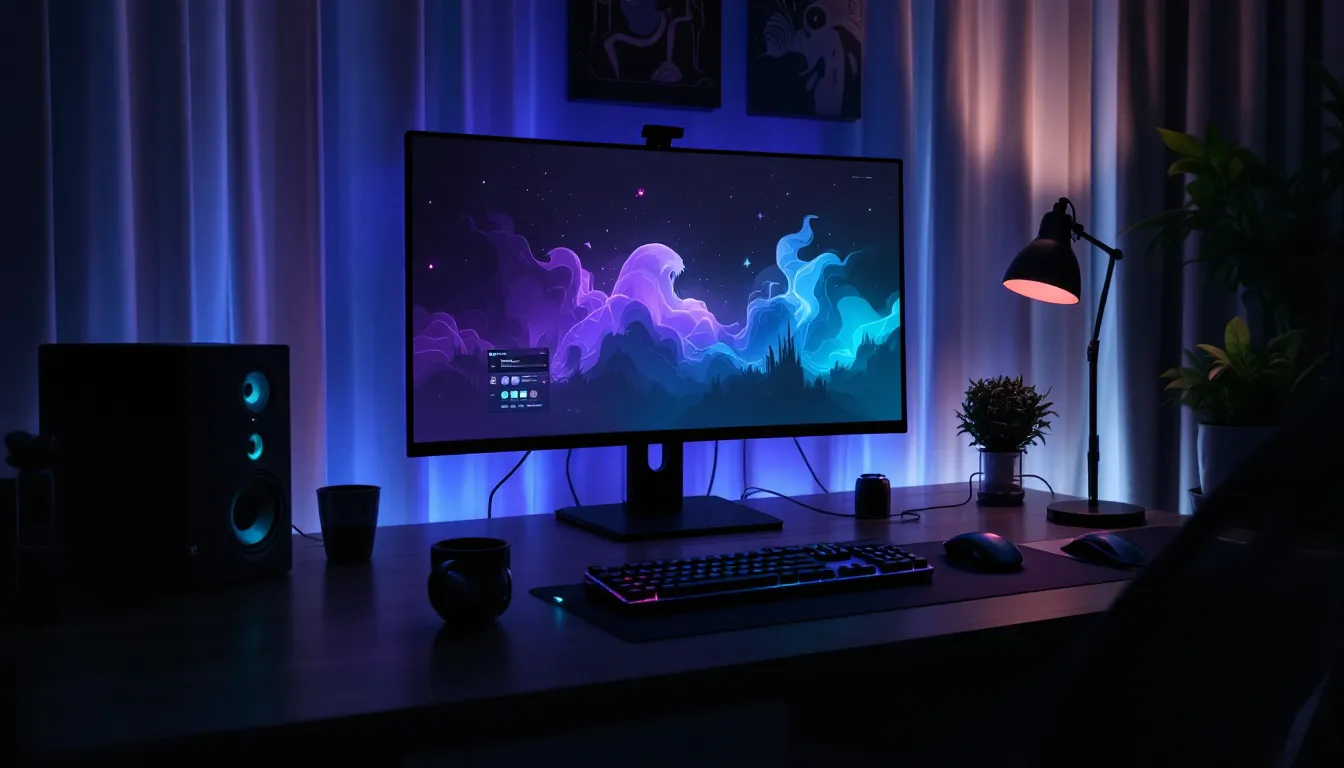
Lighting makes or breaks horror immersion. Playing during daylight in a bright room kills atmosphere, your monitor’s glow can’t compete with sunlight streaming through windows. Wait until evening or blackout your space completely. Dim or turn off all room lighting except perhaps a small lamp behind your monitor to reduce eye strain without breaking immersion.
Headphones are non-negotiable for proper horror experiences. Speakers leak sound and reduce the intimacy that makes horror work. Over-ear closed-back headphones create the soundstage developers intended, letting you track audio cues directionally and catching subtle environmental sounds that build dread. Mid-range options like HyperX Cloud or SteelSeries Arctis models work perfectly, you don’t need audiophile gear, just decent isolation and frequency response.
Display settings matter more than you’d think. Horror games often use darkness as a core mechanic, but overly bright monitors or washed-out gamma curves can accidentally reveal enemies or negate shadow-based scares. Calibrate your display using in-game brightness tools, most horror games include a calibration image where you should barely see a hidden symbol. Don’t crank brightness to “see better”: you’re defeating the design.
Remove distractions ruthlessly. Close Discord, silence your phone, tell housemates you’re occupied for the next 2 hours. Short horror games demand focused attention, a notification breaking tension during a climactic scare completely destroys the moment. The beauty of short horror is you only need to maintain focus for 90-180 minutes, not days of play sessions.
Solo Play vs. Streaming and Group Sessions
Solo play delivers the purest horror experience. No performance for an audience, no brave face for friends watching, just you and the game in complete vulnerability. Scares land harder when there’s no social buffer. You make decisions based on genuine fear rather than what might be entertaining for viewers. For your first playthrough of any horror game, going solo preserves the intended experience.
Streaming short horror has become a genre unto itself. The 1-3 hour runtime maps perfectly to Twitch/YouTube session lengths, and your genuine reactions become content. The trade-off is you’re performing fear rather than purely experiencing it, which can diminish personal impact. But streaming creates shared experiences, chat reactions, community jokes, and collaborative puzzle-solving that solo play can’t match.
Group play with friends sitting nearby transforms horror into social horror-comedy. Fear gets diluted but shared reactions amplify funny moments and bad decisions. It’s perfect for players who find horror too intense solo or want to experience games they’d never play alone. Pass-the-controller setups work well for short games, swap every death or chapter.
Co-op horror games like The Past Within or Content Warning (2024) are designed around group play. These don’t really work solo, but the shared vulnerability of multiple players creates different tension than single-player horror. Voice chat coordination while something hunts you produces adrenaline spikes that hit different from solo atmospheric dread.
The ideal approach? First playthrough solo with headphones in the dark. Second playthrough with friends or streaming for entertainment value. Short runtimes make multiple playthroughs actually feasible.
The Future of Short Horror Games in 2026 and Beyond
Emerging Trends and Technologies
AI-assisted procedural generation is starting to appear in short horror experiences. The Mortuary Assistant proved randomized elements extend replayability without bloating base content. Expect more games in 2026-2027 to use AI for generating unique scares, randomizing enemy behaviors, or procedurally assembling environments within handcrafted frameworks. The goal isn’t replacing authored content but creating variability that makes second and third playthroughs feel fresh.
Analog horror aesthetics continue dominating the indie scene. Games mimicking VHS footage, public access television, found footage, and corrupted digital media tap into nostalgia while providing convenient visual shortcuts that hide technical limitations. Maple County, September 1999, and the Fears to Fathom series prove this visual style resonates particularly well in short-form horror where establishing atmosphere quickly matters more than photorealism.
Photogrammetry and UE5 are trickling down to small teams, enabling indie developers to create photorealistic environments previously locked behind AAA budgets. Games like Summer of ’58 show what solo developers can achieve with consumer scanning tech and modern engines. Expect the visual fidelity gap between short indie horror and AAA horror to shrink dramatically by 2027.
Asymmetric multiplayer horror is experimenting with shorter session lengths. Traditional 4v1 games run 15-20 minutes per match, but new designs are compressing this to 5-10 minute bursts with faster pacing and simplified mechanics. Content Warning (2024) nails this with its 3-5 minute recording sessions in monster-filled facilities.
VR and AR: The Next Frontier for Quick Scares
VR horror has a unique problem: it’s so intense that most players can’t handle more than 30-60 minutes before needing a break. This makes VR the perfect platform for short horror experiences, yet the market hasn’t fully caught up. Most VR horror games either overstay their welcome at 3-4 hours or feel like tech demos under 20 minutes.
Meta Quest 3 and PlayStation VR2 are finally delivering the hardware performance that makes complex VR horror viable at indie budgets. Games like Cosmodread (2021) and The 7th Guest VR (2023) show how VR’s inherent immersion amplifies scares that would feel routine on flatscreen. A simple jump scare that earns an eye-roll on PC becomes genuinely startling when it happens in your physical space.
The sweet spot for VR horror appears to be 45-90 minutes, long enough for meaningful narrative but short enough to avoid VR fatigue. Affected: The Manor and Face Your Fears 2 demonstrate how effective this runtime can be. Expect more 2026-2027 releases to target this window deliberately.
AR horror remains mostly unexplored beyond gimmicky mobile apps. The technology to overlay horror elements onto your real environment exists, but compelling design implementations haven’t emerged yet. Apple Vision Pro and future AR headsets might crack this in 2027-2028, potentially creating location-based short horror experiences that use your actual home as the setting.
Haptic feedback advancements, particularly in controllers and peripherals, are starting to appear in VR horror. Feeling a heartbeat through haptics, sensing enemy proximity through vibration patterns, or experiencing environmental effects adds sensory layers that flatscreen horror can’t match. As this tech becomes standard, VR will further differentiate itself as the premium short horror platform.
The challenge for VR horror remains accessibility. Quest 3 at $499 and PSVR2 at $549 plus console requirements keep VR niche. But as prices drop and wireless PC VR becomes standard, expect short horror games to increasingly treat VR as a primary platform rather than an afterthought port.
Conclusion
Short horror games occupy a unique space in gaming where artistic vision meets accessibility. They prove that fear doesn’t require sprawling campaigns or massive budgets, just focused execution, smart design, and respect for players’ time. Whether you’re knocking out three different horror experiences in a single evening, streaming bite-sized terror for an audience, or dipping your toes into horror gaming without committing to a 20-hour ordeal, the genre delivers concentrated dread that sticks with you.
The barrier to entry has never been lower. Free experiences on itch.io provide endless experimentation, while premium titles at $5-15 offer polished productions that compete with games triple their price. Across PC, console, and mobile platforms, hundreds of short horror games wait to terrify you for 30 minutes to 3 hours before releasing you back into the relative safety of reality.
As development tools become more accessible and platforms like Steam and itch.io continue championing indie creators, short horror’s golden age is just beginning. The best scares don’t need 40 hours to land, sometimes they just need a dark room, good headphones, and 90 minutes of your complete attention.