The Best Fluffy Pancakes recipe you will fall in love with. Full of tips and tricks to help you make the best pancakes.
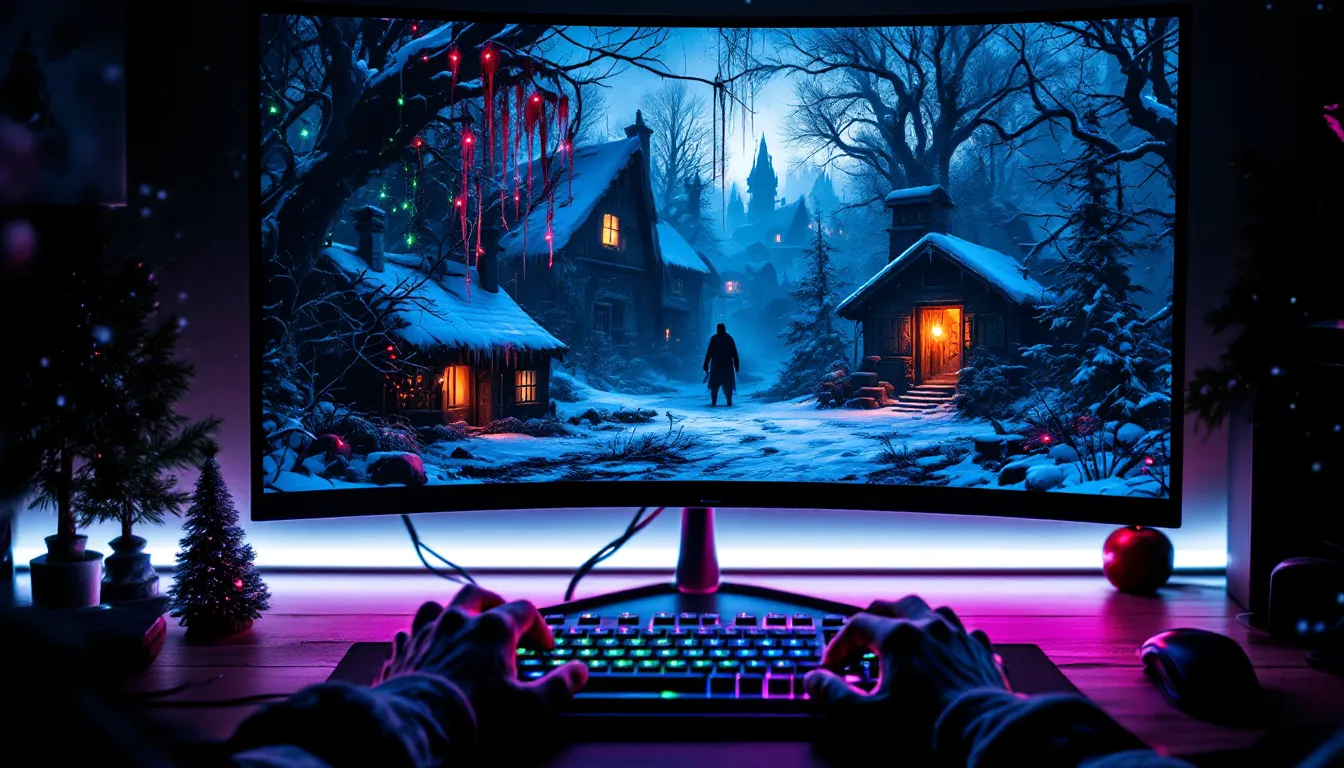
Christmas Horror Games: Terrifying Twists on the Festive Season in 2026
Nothing ruins a warm cup of cocoa quite like a wendigo wearing a Santa hat. Christmas horror games have carved out a uniquely unsettling niche in the gaming landscape, transforming twinkling lights and cheerful carols into harbingers of dread. The contrast hits different, sugarplums and bloodstains, jingle bells and jump scares. It’s that cognitive dissonance between childhood nostalgia and primal fear that makes these games so memorable.
The subgenre’s been heating up lately. Between indie devs dropping twisted holiday nightmares and AAA studios sneaking festive terrors into DLC, 2026’s offering more than enough reasons to sleep with the lights on this December. Whether players are hunting Krampus through snow-covered villages or surviving corporate hellscapes dressed in tinsel, there’s never been a better time to embrace the darker side of the season.
Key Takeaways
- Christmas horror games create powerful psychological impact by exploiting the contrast between childhood nostalgia and primal fear, transforming familiar holiday imagery into sources of genuine dread.
- Dark European folklore traditions like Krampus and Grýla provide narrative depth and cultural authenticity that elevates Christmas horror games beyond generic monster designs.
- The subgenre’s effectiveness depends on committed environmental storytelling and atmospheric design—from tarnished tinsel to deliberately distorted holiday music—rather than relying on jump scares alone.
- Notable titles like Krampus: The Devil Returns, Bloodwash: Womb Ripper DLC, and indie gems like Don’t Open Till Christmas demonstrate the range of experiences within Christmas horror games.
- Sound design and music manipulation—including slowed carols, reversed songs, and diegetic audio sources—create psychological unease that distinguishes memorable Christmas horror from superficial holiday reskins.
- Strategic platform selection and environmental setup (dim lighting, quality audio, nighttime play) significantly enhance the immersive impact of Christmas horror games for both players and streamers.
Why Christmas Horror Games Are So Effective
The Psychological Impact of Subverting Holiday Cheer
The human brain doesn’t handle contradictions well. Christmas triggers associations with safety, family, warmth, basically everything evolution taught us means survival. Horror games weaponize that conditioning. When a blood-soaked reindeer crashes through a window or a children’s choir drowns out screams, players experience a sharper emotional whiplash than generic abandoned hospital #47 could ever deliver.
Developers exploit this tension ruthlessly. Red and green color palettes that normally signal celebration become warning signs. Familiar holiday music played slightly off-key or slowed down transforms into psychological warfare. The uncanny valley deepens when players encounter twisted versions of cultural touchstones, corrupted Santas, possessed elves, malevolent snowmen. It’s effective because it violates sacred ground, turning comfort into a weapon.
The seasonal timing amplifies the impact too. Playing a Christmas horror game in December, when the real world’s decked out in identical decorations, creates an uncomfortable bleed between game world and reality. That wreath on the door looks a little different after escaping one in-game.
Dark Folklore and Twisted Traditions
Christmas wasn’t always wholesome. Krampus, Grýla, Frau Perchta, the Yule Cat, European folklore’s packed with creatures that punish misbehavior with extreme prejudice. Modern horror games tap into these pre-sanitized traditions, resurrecting figures that made children behave through genuine terror rather than reward systems.
These aren’t just aesthetic choices. The folklore provides narrative depth and cultural weight that generic monsters can’t match. A game featuring authentic Krampus lore carries centuries of storytelling momentum. Players encounter something that feels ancient and legitimate rather than a designer’s fever dream. The rules matter too, folklore creatures often have specific behaviors, weaknesses, and rituals that translate perfectly into gameplay mechanics.
Beyond European traditions, games explore winter solstice rituals, pagan celebrations absorbed into Christmas, and the concept of midwinter as a thin place where the veil between worlds weakens. It’s rich thematic territory that horror games have barely scratched.
Best Christmas Horror Games to Play This Year
Krampus: The Devil Returns
Platform: PC, PS5, Xbox Series X
|S | Release: December 2025
This standalone sequel leans hard into Austrian Alpine folklore, dropping players into a 1950s mountain village during Krampusnacht. The first-person survival horror nails the atmosphere, every cabin creaks with authenticity, every snowdrift hides potential threats. Krampus himself isn’t a constant presence: instead, the game builds dread through environmental storytelling and NPC interactions before the demon arrives.
The mechanics reward preparation. Players gather ritual items, learn protective prayers from townsfolk, and fortify locations before nightfall. When Krampus finally shows, it’s a cat-and-mouse chase through blizzard conditions with limited stamina and breaking line-of-sight mechanics that feel genuinely tense. The creature design pulls from traditional depictions, goat legs, chains, birch switches, rather than Hollywood interpretations.
Performance on current-gen consoles hits a consistent 60fps even during heavy snow particle effects. PC players with RTX cards get gorgeous ray-traced lighting that makes candlelit interiors feel properly warm against the hostile exterior.
Bloodwash: Womb Ripper DLC
Platform: PC | Release: December 2024 (still relevant)
The Womb Ripper DLC for Bloodwash dropped during holiday season 2024, and it remains one of the most authentically grimy Christmas horror experiences available. Set in a rundown laundromat decorated with dying tinsel and a crooked plastic tree, it captures the depressing side of the season perfectly.
Gameplay follows the PS1-era survival horror formula, fixed camera angles, limited inventory, obtuse puzzles, but executes it with modern design sensibility. The DLC adds about 3-4 hours of content featuring a serial killer subplot that interweaves with the base game’s narrative. Environmental details sell it: cigarette burns on decorations, half-drunk eggnog cans, a TV playing static-corrupted holiday specials.
The lo-fi graphics work in its favor. The chunky textures and deliberately ugly aesthetic create an oppressive atmosphere that photorealistic games often miss. It’s Christmas filtered through economic anxiety and urban decay.
Night at the Gates of Hell
Platform: PC | Release: November 2025
Though not explicitly Christmas-themed, Night at the Gates of Hell takes place during winter holidays in a 1980s shopping mall. The environmental design captures that specific era of commercial Christmas, animatronic displays, department store Santas, Muzak versions of carols echoing through empty corridors.
The game’s a first-person shooter with horror elements, heavily inspired by John Carpenter films. Players fight through possessed shoppers and worse things that crawled up from the mall’s sub-basements. The gunplay’s satisfying without being power-fantasy territory, ammo scarcity and tough enemies maintain tension throughout the 6-hour campaign.
What makes it special is the attention to period detail. The developers clearly studied 1980s mall culture, from the food court layout to the specific brands in store windows. The Christmas decorations feel authentic to that decade’s aesthetic, right down to the color temperature of the lights.
Lethal Company (Holiday Mods)
Platform: PC | Base Game Release: October 2023
The base game’s a co-op horror phenomenon, but the community’s holiday mods transform it into something seasonally terrifying. Modders have created winter-themed moons, replaced creatures with festive variants (the Bracken wearing elf costumes is nightmare fuel), and added Christmas-specific loot items.
The most popular mod pack, Deadly December, overhauls the space station hub with decorations while maintaining the game’s dark comedy tone. The juxtaposition of corporate exploitation humor with holiday cheer creates its own brand of horror, wage slavery decorated with garland.
Performance varies depending on mod count, but reasonable loadouts run fine on mid-range PCs. The voice proximity chat remains the MVP feature, especially when someone’s screaming about Santa Coil-Heads through the radio static. According to recent gaming community discussions, the holiday mod scene for Lethal Company has grown substantially heading into winter 2026.
Inside
Platform: PC, PS4, Xbox One, Switch, iOS | Release: 2016
Another game without overt Christmas theming, but Inside’s winter setting and December release timing have made it a seasonal replay favorite. Playdead’s puzzle-platformer unfolds in a dystopian winter landscape where an unnamed boy flees from and infiltrates a sinister organization.
The art direction remains stunning a decade later. The muted color palette of grays, whites, and harsh reds creates a cold, hostile world that perfectly captures winter’s oppressive side. The environmental puzzles challenge without frustrating, and the physics-based interactions feel weighty and deliberate.
The narrative unfolds entirely through environmental storytelling, no dialogue, no text. The ambiguity has spawned years of theory-crafting, and the final sequence still ranks among gaming’s most memorable moments. At roughly 4 hours for a complete playthrough, it’s perfect for a winter evening session.
Classic Christmas Horror Games Worth Revisiting
Parasite Eve
Platform: PS1 (playable via emulation or PS3/PSP/Vita) | Release: March 1998 (US)
Square’s survival horror RPG hybrid takes place over six days in December 1997, culminating on Christmas Eve. NYPD officer Aya Brea investigates spontaneous human combustion incidents linked to mitochondria gaining sentience. The premise is wild, the execution is brilliant.
The Christmas setting permeates everything. Carnegie Hall’s opera house, Rockefeller Center, Central Park covered in snow, these iconic New York locations become survival horror arenas. The contrast between holiday shoppers and body horror mutations hits hard. The soundtrack by Yoko Shimomura mixes festive elements with industrial horror to unsettling effect.
Combat blends real-time movement with ATB-style turns, creating tense encounters where positioning matters. The PE (Parasite Energy) system lets Aya use powers that evolve as she levels up. Weapon customization runs deep for a PS1 game, with attachment and mod systems that feel ahead of their time.
The game’s aged well even though technical limitations. Emulation with upscaling makes the pre-rendered backgrounds pop on modern displays. There’s been talk of a remake for years, but the original remains perfectly playable.
Condemned: Criminal Origins
Platform: Xbox 360, PC | Release: November 2005
Sega’s first-person horror brawler takes place during an unspecified winter in a decaying Metro City. While not explicitly Christmas-focused, the holiday season timing and winter atmosphere earned it a spot in many players’ seasonal rotations. The game follows FBI agent Ethan Thomas investigating serial killers while descending into paranoid madness.
The melee combat system still holds up impressively. Pipe wrenches, rebar, fire axes, weapons feel heavy and desperate. Blocking and timing matter more than button-mashing. Firearms appear sparingly with limited ammo, forcing players into brutal close-quarters encounters against mentally unstable enemies.
The atmosphere’s oppressive. Abandoned department stores, condemned apartment buildings, subway tunnels, every environment feels tangibly hostile. The lighting and sound design create constant unease. Mannequins and environmental details mess with perception in ways that remain effective twenty years later.
Backward compatibility makes it playable on modern Xbox consoles. The PC version runs fine on contemporary hardware but requires some .ini tweaks for proper widescreen support.
Deadly Premonition
Platform: Xbox 360, PS3, PC, Switch | Release: February 2010 (Xbox 360)
Swery’s cult classic takes place in the small town of Greenvale during autumn and winter. While the main narrative doesn’t center on Christmas, the game’s extended timeline includes December, and the quirky small-town atmosphere captures a certain type of rural American holiday vibe.
FBI Special Agent Francis York Morgan investigates a murder in this Twin Peaks-inspired open-world horror game. The game’s appeal isn’t mechanical polish, the combat’s rough and driving’s janky. It’s the characters, the bizarre humor, the willingness to be genuinely weird in ways AAA games never risk.
The survival horror segments contrast sharply with mundane activities like shaving, eating, and maintaining York’s suit. The tonal shifts between supernatural horror and small-town life simulation create a unique rhythm. Side quests reveal surprisingly deep characterization for the townspeople.
The Switch Origins version from 2019 offers the most stable experience, though purists argue the Xbox 360 original’s jank is part of the charm. Performance varies wildly across platforms, but that’s almost thematically appropriate.
Indie Gems and Hidden Festive Nightmares
Christmas Massacre
Platform: PC | Release: December 2023
This budget indie horror game delivers exactly what the title promises, a lo-fi slasher experience set during Christmas Eve. Players assume the role of a college student trapped in their apartment building while a killer in a Santa suit works through the floors.
The PS1-style graphics embrace limitations creatively. The chunky textures and low-poly models create an oppressive atmosphere enhanced by deliberate design choices rather than technical necessity. Lighting plays a crucial role, most areas sit in darkness broken only by Christmas lights and failing fixtures.
Gameplay emphasizes stealth and resource management. Limited hiding spots, stamina mechanics, and randomized killer patrol routes create genuine tension. Multiple endings depend on player choices and which neighbors survive. At $5 and roughly 90 minutes for a playthrough, it’s an easy recommendation for fans of low-budget horror.
Performance is rock-solid even on older PCs. The Steam reviews sit at “Very Positive” with players praising the atmosphere even though recognizing the limited scope.
Don’t Open Till Christmas
Platform: PC | Release: December 2025
This narrative-focused horror game unfolds entirely within a family home on Christmas morning. Players control different family members across multiple timelines, gradually revealing why opening presents might not be the wisest decision.
The non-linear storytelling requires piecing together events from fragmented perspectives. Environmental interaction drives the narrative, examining objects, reading notes, listening to voicemails. The writing’s sharp, and the voice acting exceeds typical indie quality. The developers clearly understand family dynamics and use that knowledge to craft believable character tensions before supernatural elements emerge.
Puzzle design integrates naturally into the environment. Solutions require observation and logical thinking rather than adventure game moon logic. The house layout remains consistent across timelines, rewarding spatial memory and attention to detail.
The game runs on Unity with modest system requirements. A single playthrough takes 3-4 hours, but multiple endings and hidden story elements encourage replays. Several gaming outlets praised its approach to environmental storytelling when it launched last month.
Unholy Night
Platform: PC | Release: December 2024
This roguelite horror shooter casts players as mall security guards defending against increasingly bizarre threats on Christmas Eve. The premise sounds comedic, but execution leans into legitimate horror as the nights progress and reality breaks down.
Procedural generation ensures each run feels different. Mall layouts shift, enemy spawns randomize, and weapon/upgrade availability varies. The core loop involves surviving waves, spending currency on upgrades, and pushing deeper into the mall’s reality-warped sections.
The enemy design escalates cleverly. Early waves feature shoppers exhibiting odd behavior. By night five, players face genuinely disturbing creatures that retain unsettling holiday thematics. Boss encounters require pattern recognition and proper builds rather than pure reflexes.
The pixel art style allows for surprisingly grotesque imagery while maintaining visual clarity during chaotic combat. Runs typically last 30-60 minutes depending on skill and RNG. The meta-progression system provides permanent upgrades that ease subsequent attempts without trivializing the challenge.
Community mods have added additional mall themes, weapons, and enemy types. The developer actively supports the modding scene, which has extended the game’s lifespan considerably.
What Makes a Great Christmas Horror Game
Atmosphere and Environmental Storytelling
The best Christmas horror games understand that atmosphere carries as much weight as mechanics. Environmental details matter, the specific type of decorations, their condition, placement, and how they interact with lighting. A string of lights with one bulb out hits different than perfect illumination. Tinsel that’s slightly tarnished, ornaments with hairline cracks, wreaths with browning needles, these details communicate narrative without a single line of dialogue.
Effective environmental storytelling layers context into explorable spaces. A living room tells stories through present arrangement, discarded wrapping paper, half-eaten cookies, family photos on the mantle. When horror intrudes on these carefully constructed domestic scenes, players feel the violation more acutely because the spaces felt lived-in first.
Lighting and weather effects amplify mood significantly. Snowfall visible through windows, frost creeping across glass, the specific quality of winter sunlight filtering through overcast skies, these elements ground horror in seasonal reality. The contrast between warm interior lighting and harsh exterior cold creates psychological safety zones that horror can violate.
Balancing Holiday Aesthetics with Terror
The tonal balance separates memorable Christmas horror from gimmicky holiday skins. Games need to commit to both elements rather than treating Christmas as surface dressing. Krampus: The Devil Returns succeeds because it takes Alpine folklore seriously while fully embracing the Christmas setting. Weak examples slap Santa hats on generic zombies and call it festive.
The most effective approach integrates holiday elements into core mechanics. Silent Night, Deadly Night-inspired games where jingle bells announce danger transform a cheerful sound into a warning. Games where Christmas lights affect visibility or enemies react to specific colors make the aesthetic functional rather than decorative.
Humor can work if it serves the horror rather than undercutting it. Dark comedy about consumerism, family dysfunction, or holiday stress adds relatability. Pure comedy kills tension unless the game intentionally aims for horror-comedy, which requires different design considerations.
Sound Design and Music
Audio design makes or breaks horror games, and Christmas settings provide unique opportunities. Traditional carols played wrong trigger uncanny valley responses, slowed down, in minor keys, with instruments removed or added, interrupted by static or other sounds. The brain recognizes the melody but rejects the execution.
Diegetic sound sources matter. A radio playing holiday music in an abandoned location raises questions. Is it still on a timer? Did someone leave recently? Is something using it as a lure? Music boxes, toy instruments, choir recordings, these sources can justify holiday audio while creating narrative intrigue.
Silence punctuated by seasonal sounds often works better than constant audio. Wind chimes made from icicles, distant bells, snow crunching underfoot, the specific creak of frozen wood, these sounds establish setting while allowing quiet moments that amplify jump scares or creeping dread.
Ambient layers build subconscious tension. Faint singing beneath wind sounds, whispered lyrics under music, reversed carols at barely audible volumes, players might not consciously register these elements, but they contribute to overall unease. Many horror game developers emphasize that layered audio design often separates competent horror experiences from truly memorable ones.
Tips for Streaming and Playing Christmas Horror Games
Setting the Mood for Maximum Scares
Physical environment impacts horror game effectiveness more than players realize. Lighting matters, complete darkness creates eyestrain and visibility issues, but bright room lighting kills immersion. The sweet spot: dim ambient lighting behind the screen that reduces glare without illuminating the play space. Bias lighting preserves contrast while reducing eye fatigue during extended sessions.
Audio setup makes a substantial difference. Headphones provide superior spatial audio and block external noise, but quality speakers allow environmental sounds to blend with game audio in interesting ways. For streaming, headphones prevent audio feedback while maintaining immersion. Ensure audio balancing doesn’t crush quiet moments, dynamic range matters in horror.
Timing sessions matters too. Playing during actual nighttime enhances psychological impact. The knowledge that it’s dark outside, that the world matches the game’s atmosphere, adds subconscious weight. Morning sessions feel safer regardless of in-game events.
For streamers, audience interaction needs boundaries. Chat can break tension if constantly checking for reactions. Some streamers designate specific moments for chat engagement between horror segments. Others embrace the chaos, using chat as a psychological safety net that makes scares more bearable.
Platform Recommendations and Performance Tips
For PC players, most indie Christmas horror games run fine on modest hardware. Check Steam system requirements, but generally, anything with a GTX 1060 or equivalent handles the subgenre comfortably. The exceptions are poorly optimized Unity projects, read reviews for performance warnings.
Console players should verify backward compatibility and performance modes. Many classic titles like Condemned run through backward compatibility on Xbox Series X
|
S with auto-HDR and improved frame pacing. PS5’s backward compatibility covers PS4 titles but not PS3 or earlier without streaming services.
Switch handles ports of older games well but struggles with demanding current-gen titles. The portable factor adds value for horror games, playing under blankets with headphones creates unique intimacy. Just manage expectations about visual fidelity and performance compared to other platforms.
For streaming, dedicate encoding to GPU if possible to preserve CPU resources for game performance. OBS settings for horror games should prioritize bitrate over resolution if bandwidth limits force choices, compression artifacts are more noticeable in dark scenes than slight resolution reductions.
Capture card users streaming console gameplay should enable game mode on displays to minimize input lag. Horror games often require quick reactions, and even 30-50ms delay affects gameplay feel noticeably.
Upcoming Christmas Horror Releases to Watch
Several promising titles are targeting holiday 2026 releases, though smart money waits for confirmation before getting hyped.
Frost Hollow recently got a December 2026 release window announcement. The first-person survival horror game takes place in an isolated ski resort during a blizzard. Early footage shows impressive snow deformation tech and atmospheric lighting. Developer interviews mention inspiration from The Shining and Nordic folklore. Platforms confirmed include PC and current-gen consoles.
Noel entered closed beta last month. This multiplayer asymmetric horror game casts one player as Krampus hunting others playing as misbehaving children trying to survive until dawn. The concept’s been done in other horror contexts, but the Christmas theming and planned 2v8 mode could differentiate it. PC exclusive at launch with console ports under consideration.
Silent Night: The Game exists in licensing limbo but leaked footage suggests development continues. Based on the 2012 film (itself a remake), it would mark the first major Christmas horror game based on established IP. Take this one with salt, horror game licensing deals fall apart constantly.
Independent developers continue pumping out Itch.io and Steam releases throughout Q4. The barrier to entry for lo-fi horror means dozens of small projects drop annually. Quality varies wildly, but gems emerge. Following horror game curators on Steam helps filter signal from noise.
VR Christmas horror remains underexplored. A few indie projects have attempted it, but no major studio’s committed resources to a full VR Christmas horror experience. The potential’s obvious, VR’s presence and immersion would amplify holiday horror’s core tensions effectively. Maybe 2027.
Conclusion
Christmas horror games occupy a strange, uncomfortable space in gaming, familiar yet alien, comforting yet terrifying. The subgenre’s continued growth proves players crave experiences that challenge their relationship with culturally significant imagery and traditions. Whether revisiting PS1 classics or diving into this year’s indie offerings, there’s genuine value in confronting the darker aspects of a season often sanitized beyond recognition.
The best entries understand that effective horror requires commitment to both elements. Christmas can’t be window dressing any more than horror can be jump scares wearing Santa hats. When developers respect the psychological weight of the season and the craft required for legitimate horror, they create experiences that linger long after the decorations come down.
As 2026’s holiday season approaches, the lineup offers something for every type of horror fan, folklore enthusiasts, survival horror purists, co-op chaos seekers, narrative devotees. The lights are twinkling, the snow’s falling, and something’s definitely waiting in the dark. Might as well see what it wants.