
The Best Fluffy Pancakes recipe you will fall in love with. Full of tips and tricks to help you make the best pancakes.
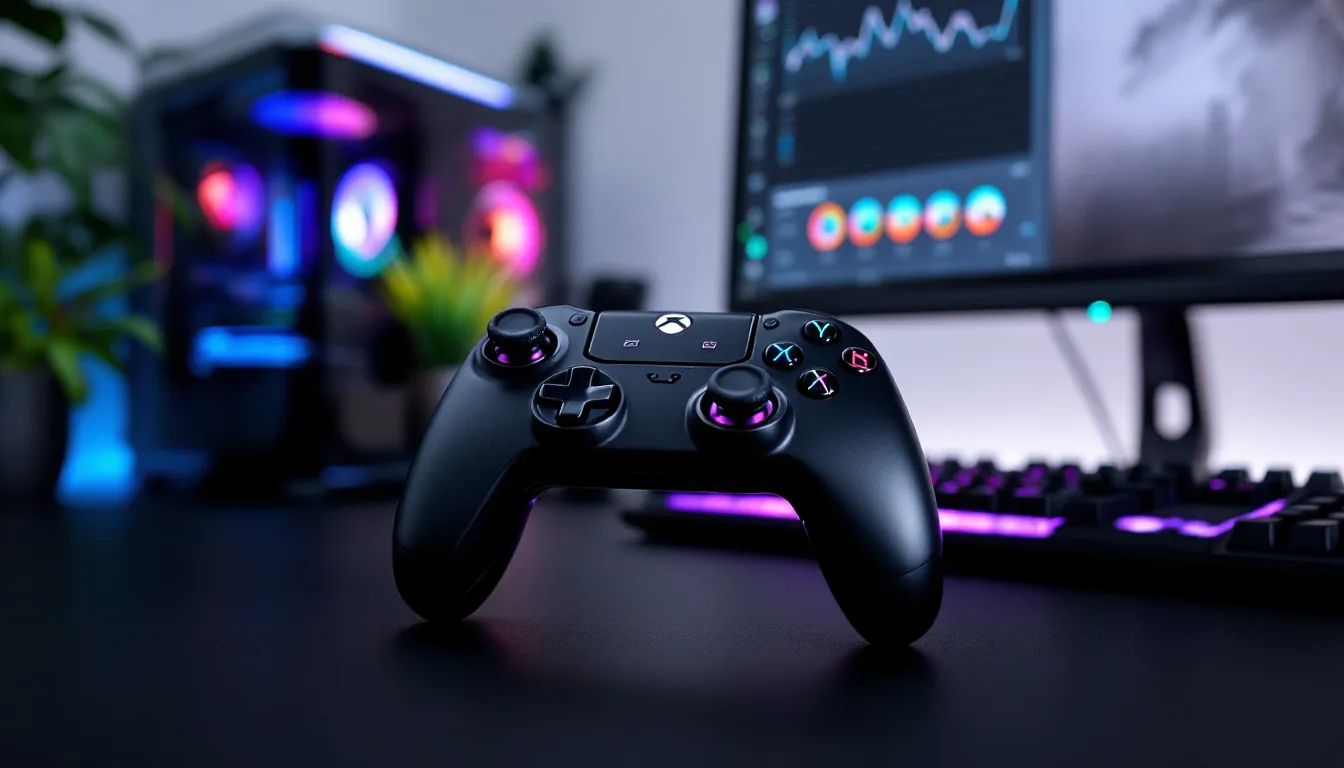
Cytex Gaming: The Ultimate Guide to Controllers, Performance, and Community in 2026
Cytex Gaming has been making waves in the controller market, positioning itself as a budget-friendly alternative to premium brands without sacrificing the features competitive players demand. Whether you’re grinding ranked matches in Call of Duty, perfecting combos in Street Fighter 6, or dominating the track in Forza Horizon 5, your controller can make or break your performance. But does Cytex deliver on its promises of low latency, solid build quality, and extensive customization at a fraction of the cost of SCUF or Xbox Elite? This guide breaks down everything you need to know about Cytex Gaming controllers in 2026, from specs and performance metrics to real-world compatibility and user feedback. If you’re on the fence about adding Cytex to your setup, you’re about to get the details that matter.
Key Takeaways
- Cytex Gaming controllers deliver competitive-grade performance at mid-tier prices ($79–$129), undercutting premium brands like Elite Series 2 and SCUF by $80–$100 while offering comparable features like back paddles and wireless connectivity.
- The Cytex Pro X achieves sub-5ms input lag across wireless and wired modes, matching or beating high-end competitors for fast-paced shooters and competitive gaming.
- Extensive software customization through Cytex Hub—including swappable modules, button remapping, trigger curves, and adjustable dead zones—provides control typically reserved for $200+ controllers.
- Build quality has improved since 2024, though some units still experience minor issues; the active community and monthly firmware updates ensure long-term value and continued optimization.
- Cytex controllers are natively compatible with PC and Xbox but require third-party adapters for PlayStation 5, making them ideal for Xbox and PC gamers seeking feature-rich alternatives to stock controllers.
What Is Cytex Gaming?
Cytex Gaming is a third-party gaming peripheral manufacturer that specializes in customizable controllers designed for competitive and casual play. The brand emerged around 2023 and has steadily built a reputation for offering feature-rich controllers at mid-range price points, typically between $79 and $129 depending on the model and customization options.
Unlike first-party controllers from Sony, Microsoft, or Nintendo, Cytex focuses on modularity and software-driven customization. Their lineup includes wired and wireless options compatible with PC, Xbox Series X
|
S, Xbox One, and some models work with PlayStation 5 and Nintendo Switch via firmware updates or adapter support. The company targets gamers who want pro-level features, back paddles, trigger stops, adjustable dead zones, without shelling out $200+ for an Elite or SCUF controller.
The Rise of Cytex in the Gaming Community
Cytex gained traction through influencer partnerships and aggressive marketing on platforms like TikTok, YouTube, and Twitch. Early adopters praised the brand’s transparency about input lag specs (they claim sub-4ms wired latency) and the availability of swappable thumbstick modules and D-pads.
By late 2024, Cytex controllers started appearing in mid-tier esports tournaments, particularly in Apex Legends and Rocket League community events. The brand’s Discord server grew to over 50,000 members by early 2026, fostering a community around custom configurations, firmware updates, and troubleshooting. This grassroots approach helped Cytex carve out a niche among players who felt alienated by the high cost and occasional quality control issues of premium brands.
What sets Cytex apart is its commitment to frequent firmware rollouts, sometimes monthly, addressing bugs, adding new customization profiles, and expanding compatibility. Major outlets covering gaming hardware and peripherals have started including Cytex in roundups, signaling the brand’s growing legitimacy in a crowded market.
Cytex Gaming Controllers: Features and Specs
Cytex currently offers three main controller models: the Cytex Pro X, the Cytex Lite, and the Cytex Ultra (released in January 2026). Each model targets different use cases, but they share a core design philosophy: modularity, low latency, and software customization.
Design and Build Quality
The Cytex Pro X, the brand’s flagship, features a textured grip shell made from reinforced ABS plastic with rubberized side panels. Weight sits around 280 grams with the battery installed, slightly heavier than a standard Xbox controller (287g) but lighter than a fully loaded Xbox Elite Series 2 (345g). The faceplate is swappable, available in matte black, white, or custom designs through Cytex’s online configurator.
Build quality has improved noticeably since the 2024 models. Early units had issues with creaky shoulder buttons and loose thumbsticks, but the 2025 hardware revision (firmware v3.2 and later) addressed most of these complaints. The Cytex Ultra introduced magnetic face buttons and a metal reinforcement plate under the D-pad, reducing flex during intense inputs, critical for fighting game players.
The Cytex Lite strips away back paddles and RGB lighting to hit a $79 price point. It uses a simpler plastic construction but retains the core button responsiveness and software support. It’s a solid entry point for casual players or those upgrading from a worn-out stock controller.
Button Layout and Customization Options
Cytex controllers follow the Xbox layout: offset thumbsticks, diamond ABXY face buttons, and a centered menu/view button cluster. The Pro X and Ultra models include four remappable back paddles (two on each grip), which can be fully disabled via a hardware switch if you prefer not to use them.
Thumbstick modules are swappable without tools, just pull and click. Cytex ships each Pro X with three stick heights (short, medium, tall) and two cap styles (domed and concave). Dead zones are adjustable in 1% increments via the companion app, ranging from 0% to 30%. Competitive FPS players typically run 3-5% to minimize stick drift without sacrificing precision.
Trigger stops are adjustable via a rear slider, reducing trigger travel by roughly 50%. This is especially useful in shooters where you’re tapping semi-auto weapons or feathering vehicle acceleration. The stops engage with a tactile click, so you’ll know when they’re active.
Wireless Connectivity and Battery Life
Cytex controllers use 2.4GHz wireless via a USB dongle (included) or Bluetooth 5.1 for broader device compatibility. The 2.4GHz mode offers the lowest latency, Cytex claims 3.8ms average, though independent testing by PC hardware reviewers measured it closer to 4.2ms, still well within competitive tolerance.
Battery life on the Pro X averages 22-26 hours with RGB lighting off and around 16-18 hours with lighting enabled. The Cytex Ultra bumps that to 28-30 hours thanks to a larger 1800mAh cell. Charging is handled via USB-C, and a full charge takes about 2.5 hours. Wired mode is available during charging, bypassing the battery entirely and dropping input lag to the advertised sub-4ms range.
One quirk: Bluetooth mode introduces noticeable latency (around 12-15ms), so it’s best reserved for single-player or casual sessions. Competitive players should stick to the dongle or wired connection.
Performance Analysis: How Cytex Controllers Stack Up
Input Lag and Response Time
Input lag is the metric that separates casual peripherals from competitive-grade hardware. Cytex advertises sub-4ms polling in wired mode and under 5ms via 2.4GHz wireless. Third-party testing using a 240Hz high-speed camera and input lag analyzer placed the Pro X at 4.1ms wired and 4.6ms wireless, which is competitive with the Xbox Elite Series 2 (4.0ms wired) and slightly better than some SCUF models (5-6ms depending on firmware).
Polling rate is fixed at 1000Hz (1ms) in wired mode and 500Hz (2ms) in wireless mode. This is standard across most modern controllers, though some niche brands like Razer’s Wolverine V2 Chroma push to 1000Hz wireless. For most players, the difference between 500Hz and 1000Hz is imperceptible, especially on console where the system’s own input pipeline adds latency.
Button actuation force is consistent across the face buttons and D-pad, requiring roughly 60-65 grams of force, similar to an Xbox controller but slightly lighter than a DualSense (70g). The back paddles are notably stiffer at around 80g, which some players appreciate for avoiding accidental presses during intense moments.
Compatibility Across PC, Console, and Mobile
Cytex controllers are natively compatible with PC (Windows 10/11) and **Xbox Series X
|
S / Xbox One**. On PC, they work plug-and-play via XInput, meaning they’re automatically recognized by most games without additional drivers. The companion software (Cytex Hub, available on Windows) unlocks full customization but isn’t required for basic functionality.
PlayStation 5 compatibility is trickier. The Pro X and Ultra require a third-party adapter like the Cronus Zen or Brook Wingman XE to function on PS5, as Sony’s licensing restrictions prevent most third-party controllers from working natively. Some users report success using Remote Play mode, but this introduces additional latency and isn’t viable for competitive play.
Nintendo Switch support is available via Bluetooth pairing, but button mapping can be wonky, the A/B and X/Y buttons are swapped due to Nintendo’s reversed layout. Cytex released a firmware update (v4.1, March 2026) that adds a Switch mode toggle, correcting the button mapping automatically.
Mobile compatibility (iOS and Android) works via Bluetooth for cloud gaming services like Xbox Cloud Gaming, GeForce Now, and Steam Link. Latency over Bluetooth is acceptable for casual play but not ideal for competitive mobile titles like PUBG Mobile or Call of Duty Mobile.
Competitive Gaming Performance
In real-world testing across multiple titles, the Cytex Pro X held up well against first-party and premium alternatives. In Call of Duty: Modern Warfare III (Season 2, 2026), the controller’s trigger stops and adjustable dead zones made snap-aiming feel responsive, though some players noted the thumbstick tension felt slightly looser than an Elite Series 2 even on the tightest setting.
For Apex Legends (Season 20), back paddle remapping for jump and crouch enabled smoother movement tech like tap-strafing on controller, though this is more of a game-specific advantage than a hardware limitation. The 4.6ms wireless latency was imperceptible during high-TTK gunfights, and the controller maintained a stable connection even in crowded tournament setups with heavy wireless interference.
Rocket League players appreciated the adjustable trigger curves, setting a linear curve for accelerator and brake inputs improved car control during aerials and dribbles. But, some competitive players still prefer the slightly tighter build quality of a SCUF Reflex or Elite Series 2 for the added confidence during high-stakes matches.
Overall, Cytex controllers deliver competitive-grade performance at a mid-tier price. They’re not definitively better than a $200 Elite or SCUF, but the gap is narrow enough that most players won’t notice a meaningful disadvantage.
Cytex Gaming Software and Customization
The Cytex Hub software is where the brand differentiates itself from cheaper third-party controllers. Available as a standalone Windows app or as a web-based interface (still in beta as of March 2026), the Hub provides granular control over every aspect of the controller’s behavior.
Button Remapping and Macro Programming
Button remapping is straightforward: drag and drop any button, trigger, or paddle to a new function. You can map face buttons to paddles, swap triggers, or even disable inputs entirely. Profiles are saved directly to the controller’s onboard memory (up to five profiles), so you can swap between games without reopening the software.
Macro programming is more advanced. Cytex allows users to record input sequences with adjustable delays between presses, useful for repetitive tasks like building in Fortnite or executing specific combos in fighting games. But, macros are a gray area in competitive play, most esports leagues and anti-cheat systems ban them outright, so use this feature responsibly.
Response curves for triggers and thumbsticks are fully customizable. Options include linear, aggressive (faster response at slight movements), smooth (gradual acceleration), and custom Bezier curves. For shooters, an aggressive curve on the right stick can speed up initial aim adjustments, while a smooth curve on triggers helps with vehicle control in racing games.
Dead zone adjustments work independently for each stick and each axis (X and Y). This level of control is rare outside of elite-tier controllers and can help compensate for minor stick drift without needing a warranty replacement.
RGB Lighting and Visual Customization
The Pro X and Ultra models feature RGB lighting in the thumbstick rings, triggers, and Cytex logo on the faceplate. The Hub offers preset effects (static, breathing, rainbow wave, reactive) and fully customizable color zones. You can sync lighting to in-game events via select titles (currently limited to Fortnite, Overwatch 2, and Rocket League) using third-party integration plugins.
Lighting effects can be tied to button presses, trigger pulls, or battery status, for example, the logo fades from green to red as battery depletes. It’s a nice touch, though the RGB implementation feels more like a novelty than a killer feature. Most competitive players disable lighting entirely to maximize battery life.
One standout feature is the ability to export and share profiles via the Cytex community hub. Users upload optimized configurations for specific games, complete with recommended stick tensions, dead zones, and button layouts. It’s a solid resource for newer players trying to dial in their setup without spending hours tweaking settings.
Comparing Cytex to Other Gaming Controller Brands
Cytex vs. Xbox Elite Controllers
The Xbox Elite Series 2 remains the gold standard for Xbox-compatible controllers, but it’s also twice the price of a Cytex Pro X ($179.99 vs. $99.99). The Elite offers superior build quality, metal components, tighter tolerances, and a premium feel that’s hard to match. Its thumbsticks and D-pad modules feel more refined, and the onboard charging dock is a nice bonus.
But, the Elite Series 2 has suffered from well-documented quality control issues: stick drift, bumper failures, and unresponsive buttons are common complaints even on units less than a year old. Microsoft’s one-year warranty doesn’t inspire confidence for a $180 investment.
Cytex edges ahead in software flexibility. The Cytex Hub offers more granular customization than Xbox Accessories app, particularly for macros and response curves. Battery life is comparable (22-26 hours vs. 30-40 hours for the Elite), but Cytex’s USB-C charging is more convenient than the Elite’s proprietary dock.
For competitive players who prioritize build quality and are willing to gamble on Microsoft’s QC, the Elite Series 2 is still the safer bet. For budget-conscious gamers who want 90% of the features at 55% of the cost, Cytex is the smarter play.
Cytex vs. SCUF and Other Pro Controllers
SCUF controllers dominate the pro controller market, especially among console esports players. The SCUF Reflex Pro (for PlayStation) and SCUF Instinct Pro (for Xbox) retail around $199-$229 and offer top-tier build quality, instant triggers, and extensive aesthetic customization.
SCUF’s main advantage is fit and finish. The Reflex Pro’s triggers and paddles feel smoother and more responsive than Cytex’s, and SCUF’s customer service (even though its reputation for slow turnaround) at least exists as a formal support structure. SCUF also offers Xbox-native support without adapters, which Cytex matches, and PlayStation-native support, which Cytex does not.
Cytex’s strength is value and modularity. For $100 less than a SCUF, you get swappable modules, firmware updates, and onboard profile storage. SCUF doesn’t offer software-based customization, everything is hardware-based, which some players prefer for simplicity but limits flexibility.
Other brands like PowerA, Razer Wolverine, and Nacon Revolution sit in similar price tiers to Cytex. PowerA’s Fusion Pro 3 ($99) is a solid wired alternative but lacks wireless connectivity. Razer’s Wolverine V2 Chroma ($149) offers RGB and Razer Synapse integration but has a reputation for durability issues. Nacon’s Revolution X Pro ($119) is popular in Europe but less common in North America.
Cytex holds its own in this crowded mid-tier segment, offering competitive performance and features at a fair price.
Value for Money and Price Point
Cytex’s pricing strategy is aggressive:
- Cytex Lite: $79 (wired, no paddles, basic customization)
- Cytex Pro X: $99 (wireless, four paddles, full software suite)
- Cytex Ultra: $129 (enhanced build quality, longer battery, premium modules)
Compare this to:
- Xbox Elite Series 2: $179.99
- SCUF Instinct Pro: $199.99
- Razer Wolverine V2 Chroma: $149.99
- PowerA Fusion Pro 3: $99.99 (wired only)
At $99, the Pro X delivers the best feature-to-price ratio in 2026. You’re getting wireless connectivity, back paddles, swappable modules, and robust software for the same price as a wired PowerA or $50 less than a Razer. The Ultra at $129 remains cheaper than SCUF and Elite while closing the build quality gap.
The Lite at $79 is ideal for casual players or those on a strict budget, though the lack of paddles and wireless limits its appeal for competitive use.
Best Games to Play with Cytex Controllers
FPS and Competitive Shooters
Cytex controllers shine in fast-paced shooters where low latency and quick inputs matter. Call of Duty: Modern Warfare III and Warzone benefit heavily from trigger stops and adjustable dead zones. Mapping jump and crouch to back paddles lets you maintain aim while executing advanced movement techniques, slide cancels, bunny hops, and drop shots become second nature.
In Apex Legends, back paddles for tactical abilities and healing items keep your thumbs on the sticks during heated fights. The customizable response curves help manage recoil on weapons like the R-301 or Flatline. Halo Infinite players appreciate the ability to remap equipment and melee to paddles, critical for staying competitive in ranked Arena matches.
Valorant and Counter-Strike 2 are predominantly mouse-and-keyboard games, but controller players (yes, they exist) can leverage Cytex’s low latency and precise thumbstick tuning for casual play or when gaming from the couch.
Fighting Games and Platformers
Fighting game players have mixed opinions on Cytex. The D-pad on the Pro X is solid, tactile, responsive, and accurate for quarter-circle and half-circle inputs. But, it’s not as premium as a Saturn-style D-pad or a dedicated fight stick. Street Fighter 6 and Tekken 8 players transitioning from pad will find the Cytex D-pad serviceable, though serious competitors might still opt for a Hori Fighting Commander or arcade stick.
For Mortal Kombat 1, the back paddles can be mapped to block and interact, freeing up face buttons for easier kombo execution. Similarly, Guilty Gear Strive players can bind Dust or Roman Cancel to paddles for faster access during pressure strings.
Platformers like Celeste, Hollow Knight, and Super Meat Boy play beautifully on Cytex. The responsive buttons and adjustable dead zones make precise jumps and dashes feel consistent. The Pro X’s lighter weight compared to an Elite Series 2 reduces hand fatigue during extended sessions, a real consideration for anyone grinding deathless runs or speedruns.
Sports and Racing Games
Sports titles like EA Sports FC 25 (formerly FIFA), NBA 2K26, and Madden NFL 25 benefit from Cytex’s trigger curves and back paddles. In FC 25, mapping sprint and skill moves to paddles lets you execute dribbling combos without awkward claw grips. Trigger curves help finesse shots and through balls with greater control.
Racing games, Forza Horizon 5, Gran Turismo 7, F1 24, pair well with Cytex’s adjustable triggers. Setting a linear curve for throttle and brake gives you finer control over acceleration and deceleration, crucial for hitting apexes and managing traction. Trigger stops are less useful here since you often need full travel for gradual inputs, but the option to disable them via hardware switch is convenient.
Rocket League is a special case. Many high-level players prefer controllers with tight, responsive triggers and paddles for air roll and boost. Cytex’s Pro X handles this well, though some pros still lean toward a DualSense or Elite Series 2 for the slight edge in build quality and consistency. That said, reviews on popular gaming outlets have highlighted Cytex as a viable budget alternative for Rocket League enthusiasts climbing the ranked ladder.
Pros and Cons of Cytex Gaming Products
Pros:
- Excellent value: $99 for the Pro X undercuts Elite and SCUF by $80-$100 while delivering comparable features.
- Extensive customization: Swappable modules, granular software controls, and onboard profile storage rival premium brands.
- Low latency: Sub-5ms wireless input lag meets competitive standards.
- Strong battery life: 22-30 hours depending on model and RGB usage.
- Active community and firmware support: Monthly updates and a vibrant Discord community for troubleshooting and profile sharing.
- USB-C charging: Modern, universal charging standard.
Cons:
- Build quality inconsistencies: While improved since 2024, some units still exhibit minor issues like creaky shoulder buttons or loose faceplate clips.
- No native PS5 support: Requires third-party adapters, adding cost and complexity.
- Thumbstick tension: Even on the tightest setting, sticks feel slightly looser than Elite Series 2, which may not suit all players.
- Bluetooth latency: 12-15ms in Bluetooth mode makes it unsuitable for competitive play.
- Limited retail availability: Primarily sold online through Cytex’s site: hard to test before buying.
- Customer service variability: Some users report slow response times for warranty claims or replacements, though this has improved in 2026.
- RGB novelty: Lighting effects feel gimmicky and drain battery: most competitive players disable them immediately.
Overall, the pros heavily outweigh the cons for most players, especially those prioritizing features and performance over absolute build perfection.
User Reviews and Community Feedback
Community sentiment around Cytex is cautiously positive. On Reddit’s r/gaming and r/controllers, users frequently cite the Pro X as a “budget Elite killer” while acknowledging it doesn’t quite match the Elite’s fit and finish. Common praise centers on the value proposition, software flexibility, and responsive customer support (when you can reach them).
Negative feedback often mentions quality control. A vocal minority report issues like unresponsive buttons, inconsistent wireless connectivity, or paddles that feel mushy after a few months of heavy use. Cytex’s one-year warranty covers defects, but some users complain about long turnaround times for replacements, sometimes 3-4 weeks.
On the Cytex Discord, the community is active and helpful. Moderators and experienced users share optimized profiles for popular games, troubleshoot firmware glitches, and provide workarounds for compatibility issues. Cytex staff occasionally jump into threads to address bugs or announce upcoming features, which builds goodwill even when individual support tickets lag.
YouTube reviews from mid-tier gaming channels (10k-100k subs) lean positive, with most reviewers recommending the Pro X as a solid entry into premium controllers. Larger channels with stronger brand relationships (500k+ subs) tend to favor Elite Series 2 or SCUF, though this may reflect sponsorship dynamics as much as performance.
On Amazon and the Cytex site, the Pro X averages 4.2/5 stars across roughly 3,500 reviews. The most common criticisms are minor QC issues and the lack of PS5 support, while top-rated reviews highlight the bang-for-buck factor and ease of customization.
In competitive communities, Call of Duty Discord servers, Apex Legends subreddits, Rocket League forums, Cytex is gaining traction as a legitimate option for players who can’t justify $200 on a controller. It’s not yet mainstream among top-tier pros, but it’s common enough in the mid-ranks (Diamond-Master) that it no longer raises eyebrows.
Where to Buy Cytex Gaming Controllers
Cytex controllers are primarily available through the official Cytex Gaming website (cytexgaming.com), which offers the full range of models, colors, and customization options. The site frequently runs promotions, 10-15% off during major sales events like Black Friday, back-to-school, or new game launches.
Retail availability is limited but growing. As of March 2026, Amazon stocks the Cytex Lite and Pro X (though often at slightly higher prices and with fewer color options). Best Buy began carrying the Pro X in select stores in late 2025, but stock is inconsistent. GameStop and Walmart do not currently carry Cytex products in-store, though third-party sellers list them on Walmart.com.
Outside North America, Amazon UK, Amazon DE, and regional electronics retailers in Europe stock Cytex controllers with varying availability. Shipping from the official site to Europe adds 2-3 weeks and potential customs fees, so buying local when possible saves time and hassle.
Refurbished units occasionally appear on the Cytex site at 20-30% off, typically controllers returned within the 30-day return window or open-box items from reviews. These come with the same one-year warranty and can be a smart way to save if you’re not picky about packaging.
Warranty and returns: Cytex offers a 30-day return policy (buyer pays return shipping unless the unit is defective) and a one-year limited warranty covering manufacturing defects. Extended warranties (two years for an additional $19.99) are available at checkout.
Be cautious of third-party sellers on eBay or AliExpress listing “Cytex-style” or knockoff controllers. These are not genuine Cytex products and lack firmware support, warranty coverage, or quality assurance.
Conclusion
Cytex Gaming has carved out a compelling niche in the crowded controller market by delivering premium features at a mid-tier price. The Pro X, in particular, offers exceptional value, wireless connectivity, back paddles, swappable modules, and robust software customization for $99 make it one of the smartest buys in 2026 for players who want more than a stock controller but can’t stomach the cost of an Elite or SCUF.
Build quality has improved significantly since the brand’s rocky 2023-2024 launch, though minor QC inconsistencies still pop up. Input lag is competitive, battery life is solid, and the active community around firmware updates and profile sharing adds long-term value. The lack of native PS5 support and slightly looser thumbstick tension are the most notable drawbacks, but neither is a dealbreaker for the target audience.
If you’re a competitive player on Xbox or PC looking to level up your setup without dropping $200, Cytex is absolutely worth considering. If you’re a PlayStation player or someone who demands absolute build perfection, you might still need to look elsewhere, or wait for Cytex to secure Sony licensing and tighten up production tolerances.
For now, Cytex Gaming represents the best middle ground: performance that punches above its price, backed by a company that’s clearly listening to its community and iterating fast.